acf domain was triggered too early. This is usually an indicator for some code in the plugin or theme running too early. Translations should be loaded at the init action or later. Please see Debugging in WordPress for more information. (This message was added in version 6.7.0.) in /var/www/html/wp-includes/functions.php on line 6121

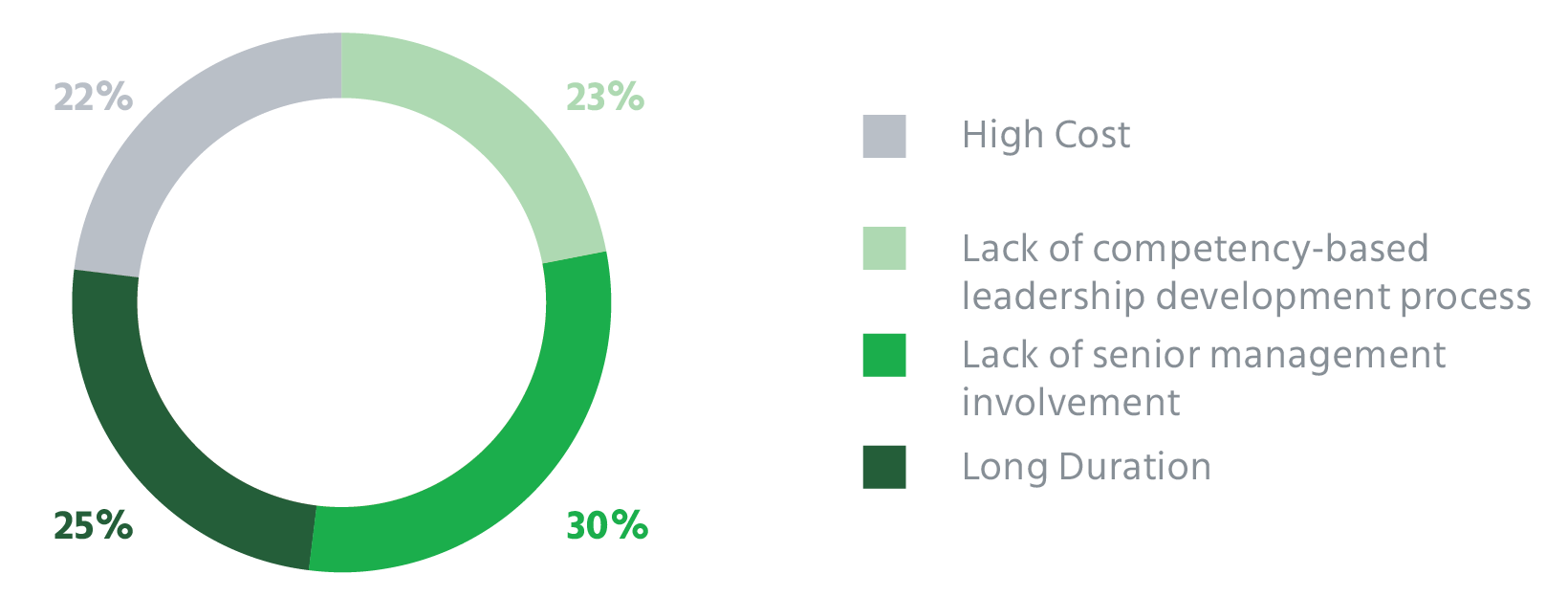
According to a study, the top challenges posing a threat to the success of leadership development are:
 a) The Lack of Involvement of Senior Management:
It is crucial to obtain the support of company leaders and management to contribute to leadership development. They are best placed to suggest the most needed skills in leadership positions and how to best develop them in budding leaders.
 b) Long Duration:
The average time taken to carry out leadership development is eight months, which is far too long for most trainees. They have to attend training along with their everyday tasks simultaneously. The trainees are often hard-pressed to find time to attend training programs.
 c) The Lack of Competency Framework Adoption:
Several companies don’t adopt a leadership competency framework to filter out candidates having leadership qualities. The lack of regularly updated competency frameworks reflecting the skill demand of each job role causes organizations to provide generic training. The training is imparted on skills that are sometimes irrelevant for the trainees.
 d) High Cost:
Organizations end up providing generic training to the employees by not identifying the training needs in potential leaders. A significant training effort is wasted in the process. It is because of two reasons:
i) Mandatory participation: Employees, who do not require training, have to attend the sessions, despite having no skill gaps.
ii) Different training needs but the same training programs: Different trainees have different skill gaps and developmental needs. Organizations often end up re-skilling the trainees by imparting the same training, which isn’t of much use to them. Employees are trained on already possessed skills, thus losing out on training on the needed skills.
Leadership development programs are much dearer than any other training program. These programs target a large number of trainees and take a long duration to impart the training. Thus they are not only inefficient in terms of investment but also fail to hold the trainees’ interest for long. At times, the leadership training programs are not customized to cater to each trainee’s individual developmental needs, leading to increased trainee absenteeism and low ROI of leadership development programs.
Challenges in Leadership Development
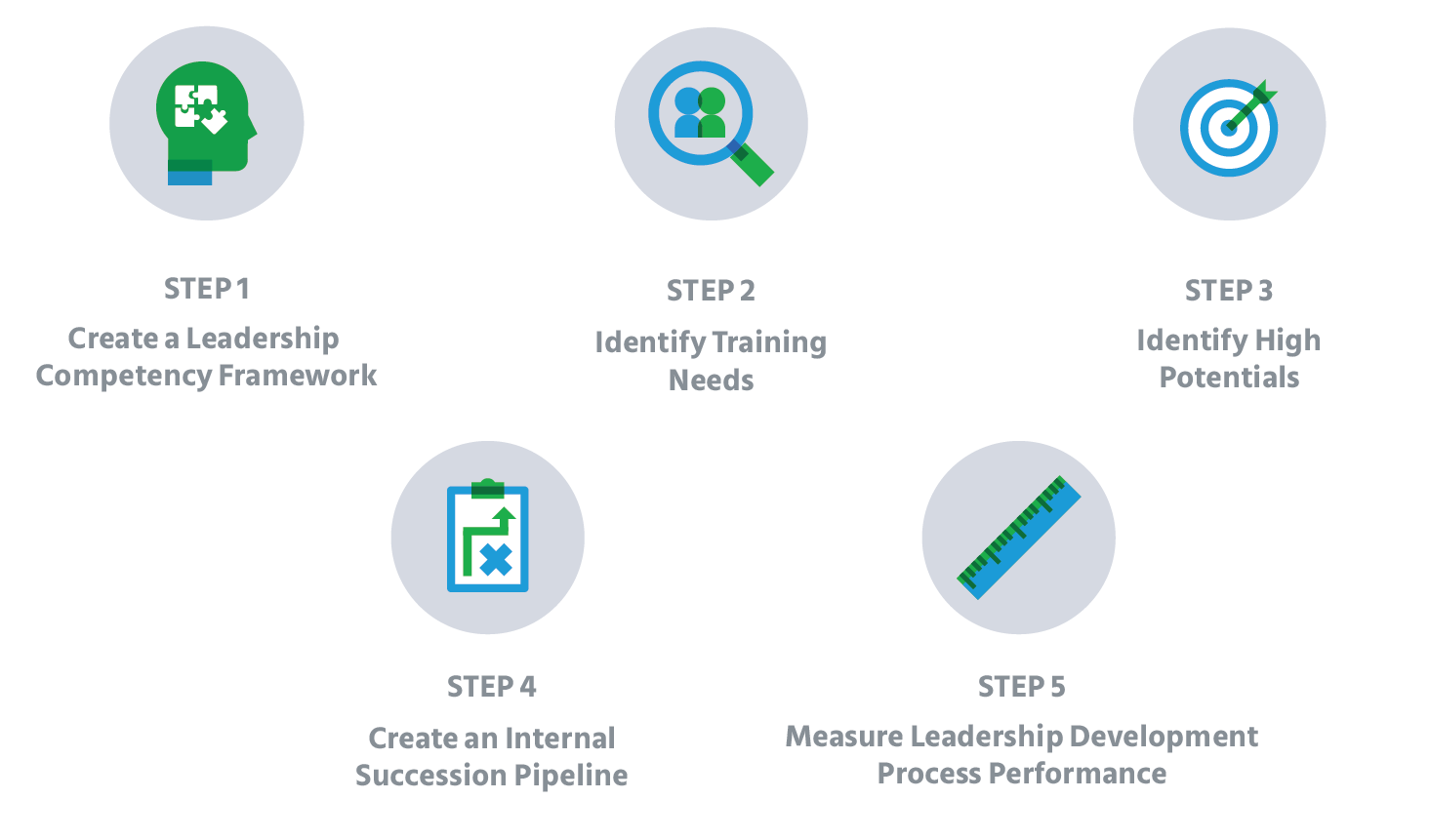
 Step 1: Create a Leadership Competency Framework
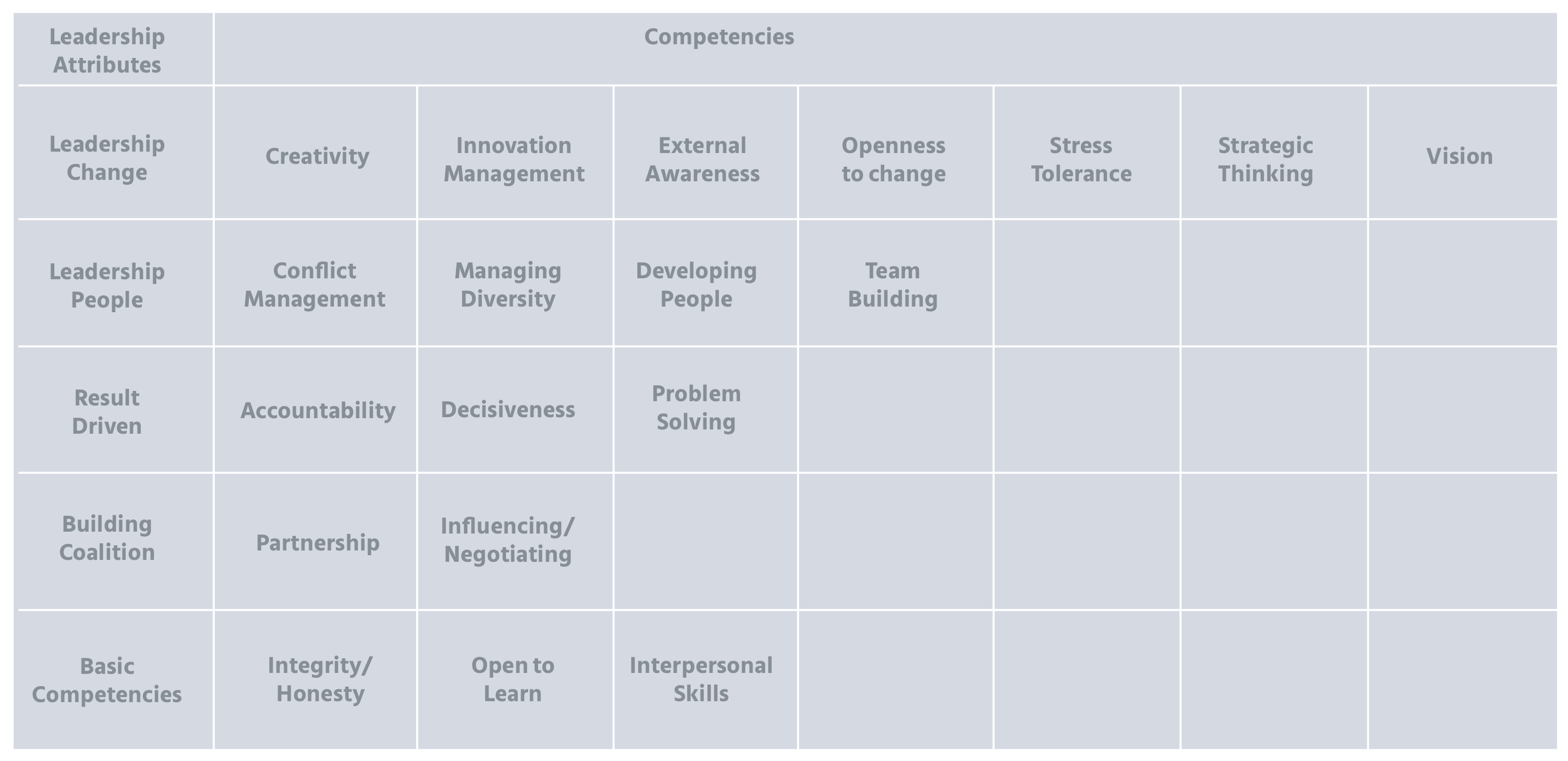
A leadership competency framework comprises of skills needed to succeed in any leadership role within the organization. It identifies the employee competencies and skill-set required for organizational leadership and management.
The competency framework can be customized to meet the specific needs of different leadership positions and should be regularly updated. It should consist of skills that help in creating a future-ready leadership team.
The Mercer | Mettl Leadership Competency Framework emphasizes the critical competencies to develop the attributes of leadership.
 Step 2: Identify Training Needs
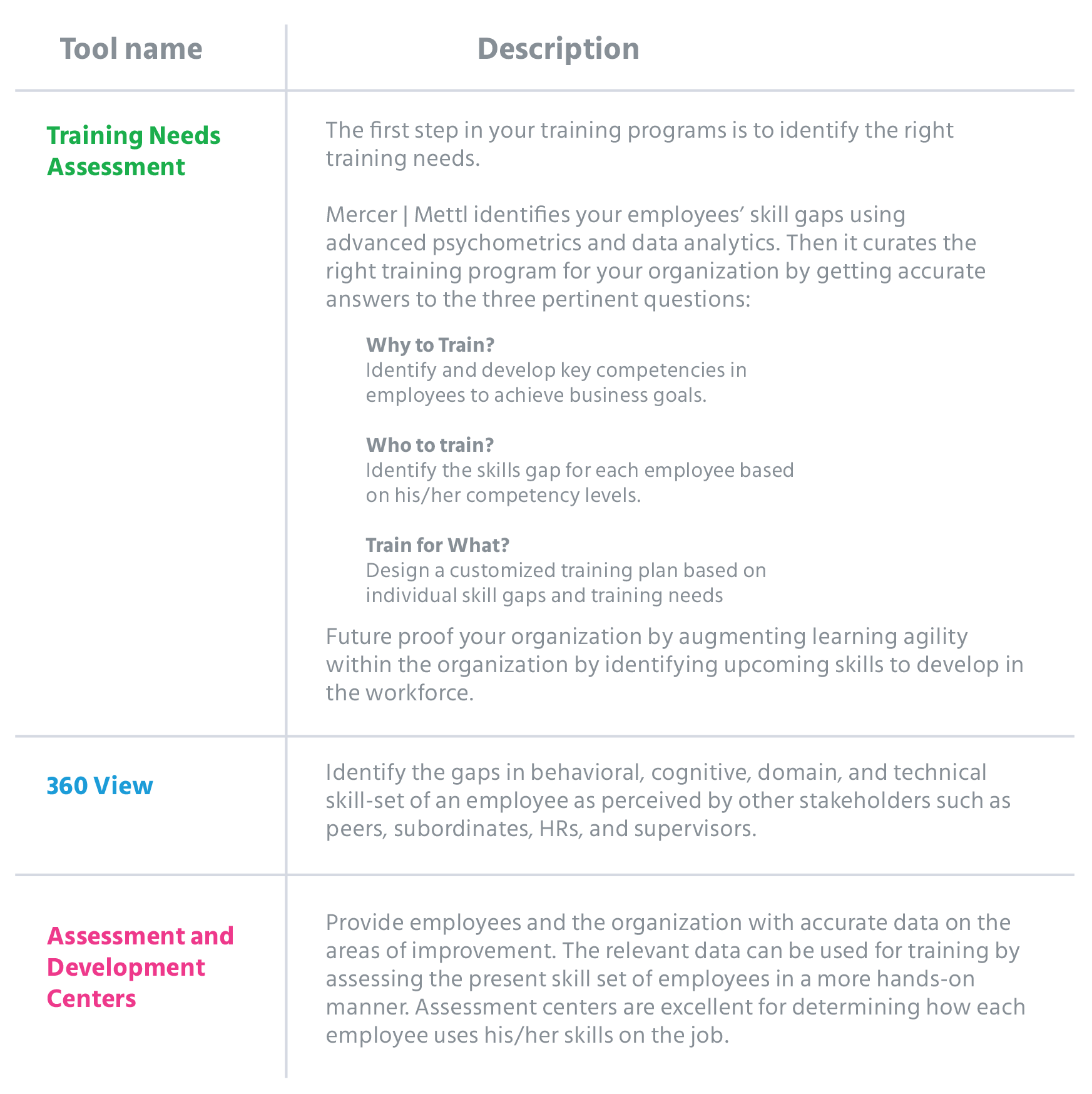
To identify the training needs, existing and potential leaders are assessed on skills included in the competency framework of their job role. Based on their specific development areas, individual development plans are constructed, followed by leadership development training.
Mettl helps in discovering training needs in employees through various tools such as Training Needs Identification assessments, Assessment and Development Centers and 360 Feedback.
 Step 3: Identify High Potentials
The organization should be aware of employees with the potential to become leaders. The selection of high potentials is made by evaluating the skill sets of employees who possess leadership skills and high learning agility. The high potentials should be identified early in their job tenure so that they can be retained and nurtured for taking up leadership roles.
Mercer | Mettl’s Psychometric assessments and tools are designed to study the organizational needs. Its scientific and data-backed tools measure human personality and predict employee behavior. Psychometric assessments enable employees’ development to their maximum potential, helping them become better managers and shaping them into responsible leaders.
Mercer | Mettl provides advanced psychometric tools that enable virtual administration of AC/DCs, along with offering the flexibility of offline activities.

Virtual AC/DC – This is an entire online suite of logically approved devices and assessments that recreate AC/DCs. It is virtual, convenient and eliminates the logistics hassles, also lowering input costs.
 Blended AC/DC– It combines virtual assessment with on-field programs according to your need to create complete behavioral maps for your employees.
 Step 4: Create an Internal Succession Pipeline
The Internal Succession Pipeline of an organization is created after the training of potential employees. The leadership roles can be taken up by prospective employees, depending on the requirement.
The high potentials are spotted in the team by the manager and trained on skills needed in leadership roles thoroughly. Their training is based on their individual skill gaps. After the training, their skill levels are evaluated practically.
As a Learning and Development Manager, you must examine whether high-potentials have any skills gap after the requisite training. Further, one must assess whether potential employees can implement the skills on the job.
Organizations should have a ready Internal Succession Pipeline to ensure that they don’t invest substantial resources, financial or otherwise, in recruiting emerging leaders from outside the organization.
Mercer | Mettl’s range of tools and assessment evaluates employee’s performance on critical competencies that are key to succeeding in leadership roles. Assessment results are benchmarked to identify key employees for the succession development plan.
 Step 5: Measure Leadership Development Process Performance
 The skill levels of all trainees are assessed pre and post-training in a scientific and data-backed manner. The objective is to ensure that the employee training needs are identified accurately, and the skill gaps are removed with effective training mediums such as Classroom, Virtual, Blended and instructor-led training. The results obtained from training assessments can improve the leadership development process efficiently and increase the organization’s ROI.
A Harvard survey found that only 24% of organizations measure the impact of their leadership development programs. As a result, the leadership development industry has a reasonably shallow tool-set, the reason being the shift in leaders’ behavior over time. A more robust set of solutions must be created to combat the challenges emanating in leadership development.
The involvement of the right stakeholders, along with a structured and scientific approach, can help organizations create high performing leadership development programs. These programs help in meeting their desired objectives continually.
The Leadership Development programs should not culminate with all the potential employees achieving their respective goals. It should be an ongoing process to identify future leaders and engage them in training programs. Skill assessments and other evaluation tests should not be a one-time practice in organizations. Employees should be encouraged to participate in leadership development programs, although it could be made optional.
Organizations that are successful in building a strong leadership workforce continue to have a distinct business advantage over those that don’t. They are much better poised to tackle unforeseen challenges in a dynamic and transient marketplace.
Originally published June 25 2019, Updated August 5 2021

Working in the content marketing industry for 6 years, Surbhi has written interesting and creative content pieces on Digital Marketing, Technology, Human resource, Accounting software, Home decor etc. She shares her knowledge on several web-platforms like Digital Vidya, Pulse, and Social Media platforms. A mother of one daughter, she loves to spend time with family and pursue her creative stints such as sketching and singing.
A leadership assessment is a type of personality test used to identify and develop the competencies required in a good leader - decision-making, empathy, communication, inspiring others, etc. A leadership test can contribute to organizational planning initiatives, such as promotion decisions, succession planning, etc.

Assess & develop leadership competencies to future-proof your business
Know More

Automate Your L&D Programs With Virtual And Blended Assessment Center Development Centers
Know More

Measure the potential of your talent and make objective organizational decisions
Know More


Thanks for submitting the comment. We’ll post the comment once its verified.


 Behavioral Competencies
 Cognitive Competencies
 Coding Competencies
 Domain Competencies





Would you like to comment?