

A company’s leadership determines its success to a great extent. Most organizations struggle to create and sustain a strong leadership team. More than 80% of organizations are faced with a leadership talent shortage. Most of the present leaders are either baby boomers (~50%) who are on the verge of retiring or millennials who do not plan to stay in one job for more than three years.


Organizations need a continuous supply of capable and dependable leaders that can take the place of the retiring baby boomers and find a way to retain and develop the millennial leaders.
Companies are constantly on the lookout for new leaders for multiple reasons. The most common reasons being- the old leaders are about to retire, or a brand-new leadership position has been created and needs to be filled with the right talent. There are two ways to fill these leadership positions- hire new talent from outside or develop existing employees to take up the available leadership positions.
As discussed in report Leadership Hiring Trends 2019, hiring leaders from outside is complicated. Leadership hiring is an extremely time and cost-intensive endeavor and the chances of finding the right talent is low as majority of quality leadership talent is already employed elsewhere. Developing existing employees to take up leadership positions is the most risk evasive path to building a strong and future-ready leadership team.
Let us have a look at the most prevalent practices in leadership development that are being practiced by successful organizations globally.
To achieve leadership success, organizations need to identify and overcome the bottlenecks that they face when carrying out leadership development. The best practices that we include here are potential solutions to the most commonly encountered challenges when carrying out leadership development.
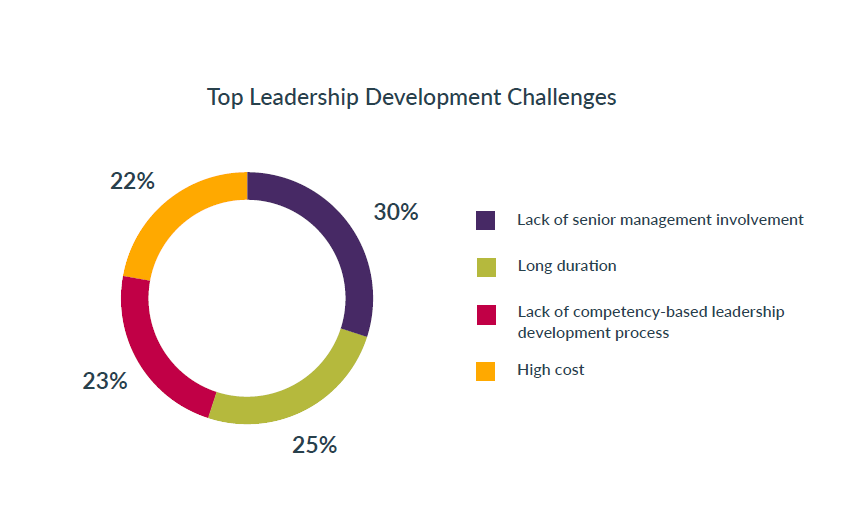
Leadership development today is a lot more challenging than it used to be. Leaders are expected to deliver more in less time. They are also expected to have a continuously evolving skill-set to meet the changing market demands. A majority of global leaders consider themselves unprepared for their new roles as they have either not received any leadership training or the training that they have received failed to positively impact their work performance.
To create great leaders, organizations must be aware of the kind of leaders they want. They need to be aware of the skills that they want their leaders to have and the type of leadership style that will help them lead their teams better.
What Competencies to Develop: We asked organizations – what key attributes of leaders are responsible for them becoming successful at their organization (Chart 9). We found out that the ability to lead business growth, followed by the ability to lead people is the most significant leadership attribute that can help leaders become successful in driving organizational and people growth.
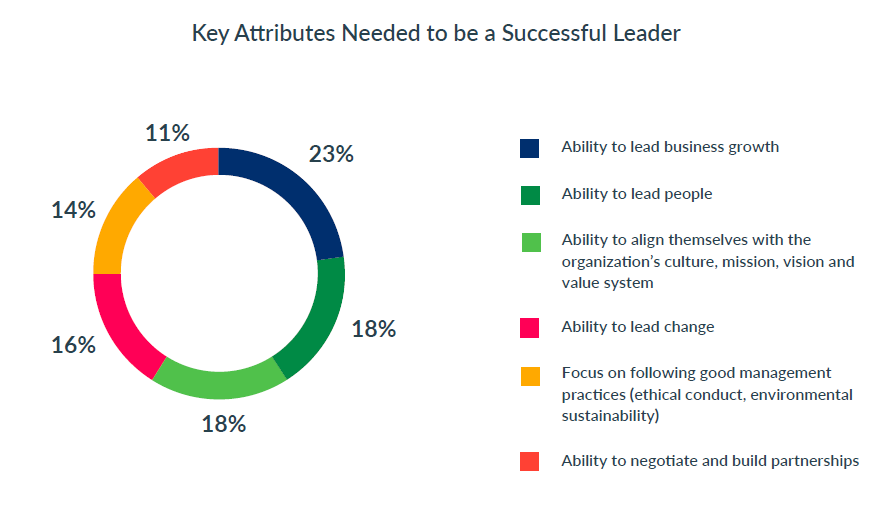
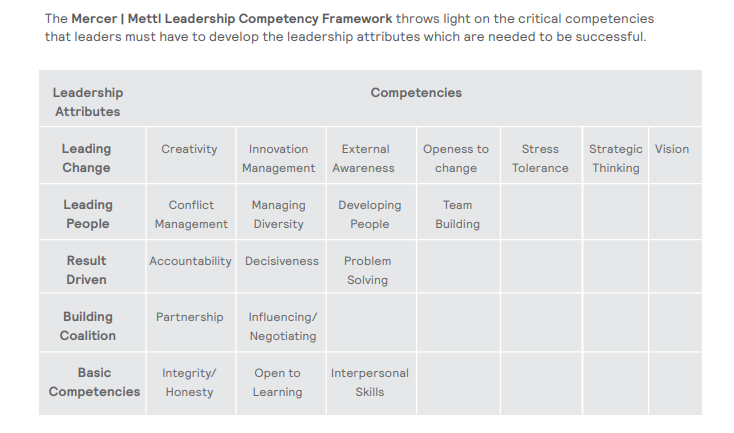
Once organizations are clear on what attributes of a leader are most crucial for their success, they can focus on developing those attributes in their upcoming and existing leaders. Each leadership attribute corresponds to specific competencies. By developing those competencies, organizations can help hone these key attributes in their leaders.
The Mercer | Mettl Leadership Competency Framework throws light on the critical competencies that leaders must have to develop the leadership attributes which are needed to be successful.
The kind of leaders that an organization wants differs from job role to job role. Organizations need to have a ready competency framework for each leadership position that will guide them in training and developing leaders for that role. The competency framework should include skills that the previous position holders had, updated to reflect the changing job responsibilities in the present and future.
It’s essential to have an organizational competency framework as the skills required to succeed in a leadership role is very different from that needed to succeed in an individual contributor role. Leaders need to be trained on these new skills to equip them with the abilities required to take care of their continuously evolving job responsibilities.
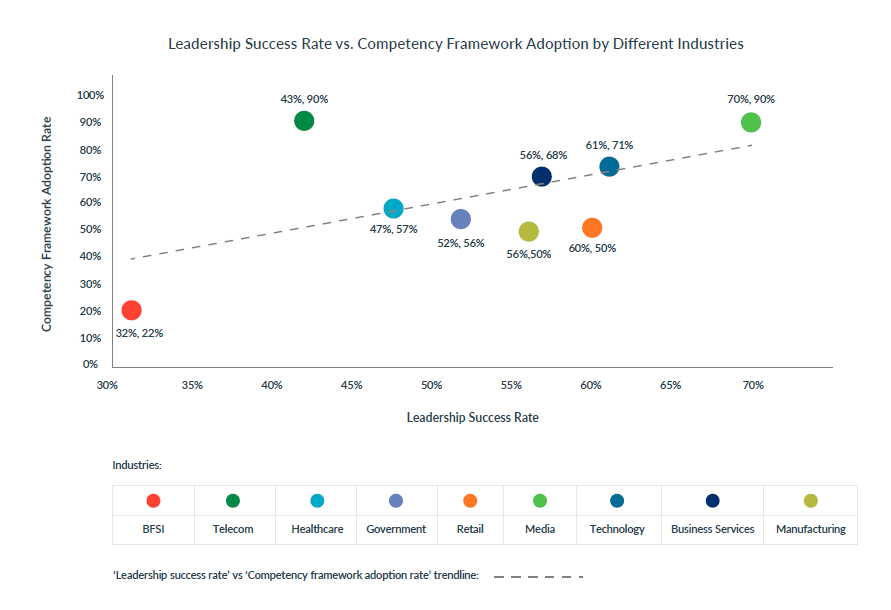
A competency-based leadership development program has a much higher chance of achieving its desired objective than generic programs. Our study reveals that Leadership success rate and competency framework adoption rate is highly positively correlated. This means companies that base their leadership hiring and development methodology on competency frameworks experience a much higher leadership success rate.
Companies with leadership competency framework are more likely to have successful leaders
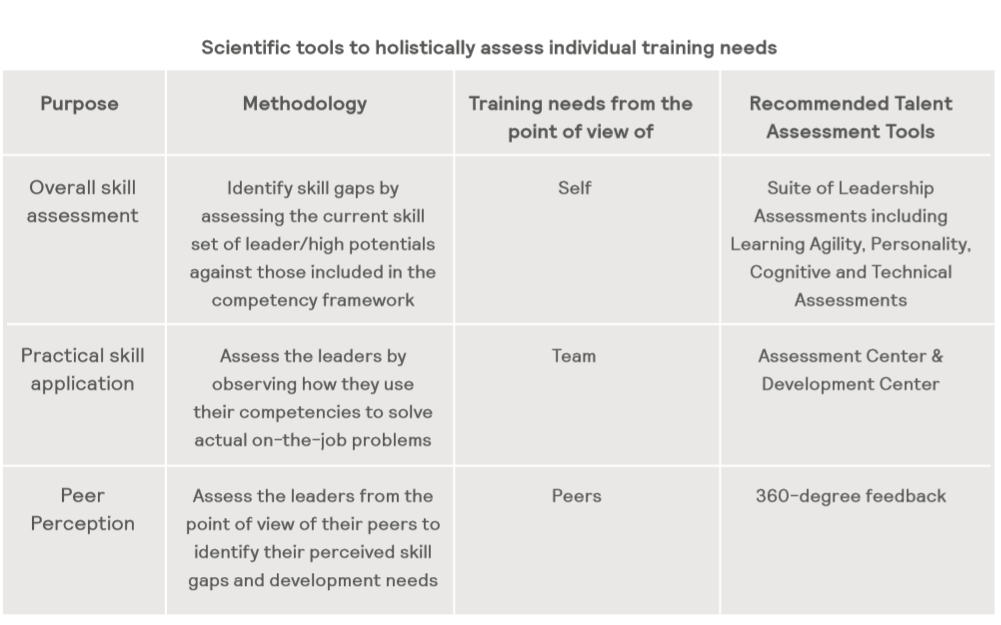
Having an accurate and regularly updated competency framework is the first step towards creating successful leadership development programs. The next step is to find a method to assess leaders to find out where they stand in terms of these competencies- what competencies are they proficient in and what competencies they need to develop further. It’s crucial to accurately assess the strengths and development areas of each leader so that they can be trained accordingly. Modern scientific talent assessment tools offer an accurate way to assess training needs in leaders.
Competency-based talent assessment tools such as 360-degree feedback, assessment centers, and leadership assessments allow organizations to identify and develop present and future leaders in a much more effective manner. Assessment tools that are customized for each organization, job role, job level and bench-marked to meet organizational & industry standards produce much more accurate results.
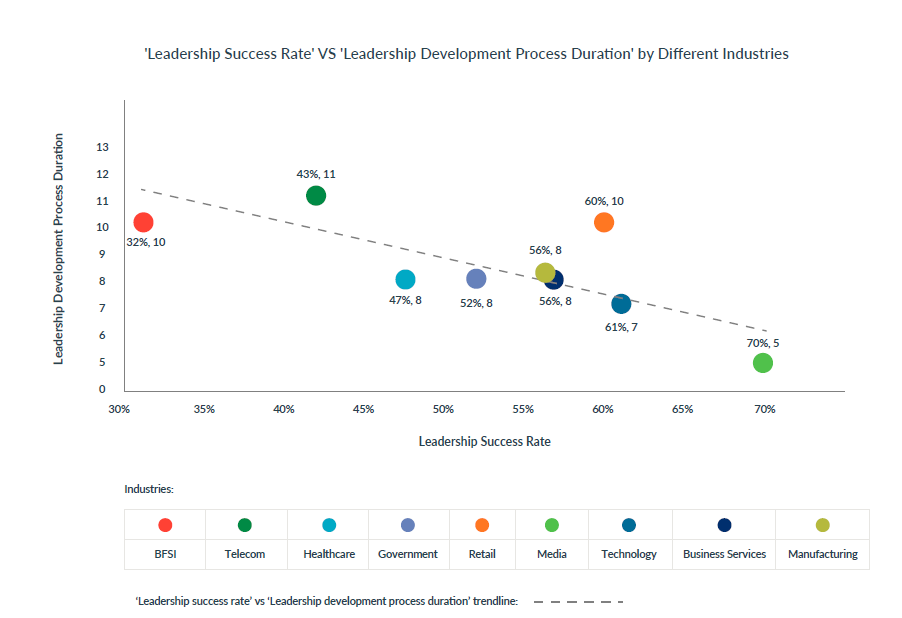
In the past decades, when spending one’s entire career of 30-40 years working at a single company was the norm, it made sense for companies to invest in their development extensively. The working population of today, which consists majorly of millennial workers (~48% of the workforce presently, which will increase to 75% by 2020, according to Forbes), believes in changing jobs every 18 months. This leaves companies with very less incentive to invest in their development to prepare them for leadership roles in the future. Less than 50% of organizations are willing to invest in the development of their employees, mostly because of the cost and time-intensive nature of these programs, followed by their low ROI.
Our survey showed that leadership development program duration and leadership success rate are highly inversely correlated (-68%). Higher the leadership development process duration, lower the organizational leadership success rate.
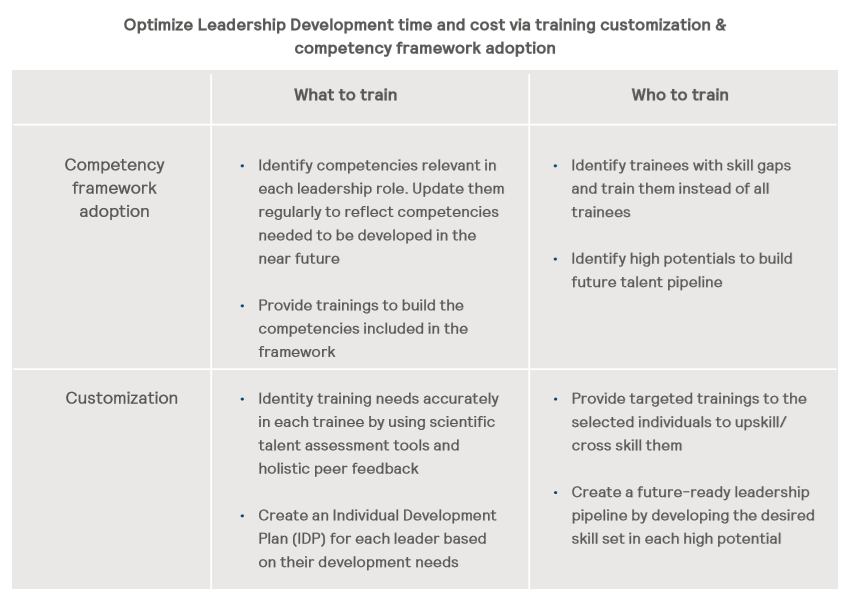
The best way to reduce leadership development duration and cost and more make it more effective is by structuring it properly. Customized competency-based talent assessment tools help in accurate identification of individual training needs and provide data-backed insights on what skills each leader needs to be trained on. This makes the training more streamlined, enabling the creation of a more structured leadership development process that is shorter in duration, less expensive, and much more effective.
Cherita Weatherspoon from Spoonfed Motivation agrees- “While it’s easier to use pre-fab leadership assessments, I caution organizations against doing that. It’s much more important to determine what the needs are for a particular role at that time than it is to determine if a candidate meets a certain set of predetermined criteria.”
When the leadership development process is customized to address individual development needs, instead of being generic, the efforts are more targeted and the results more favorable.
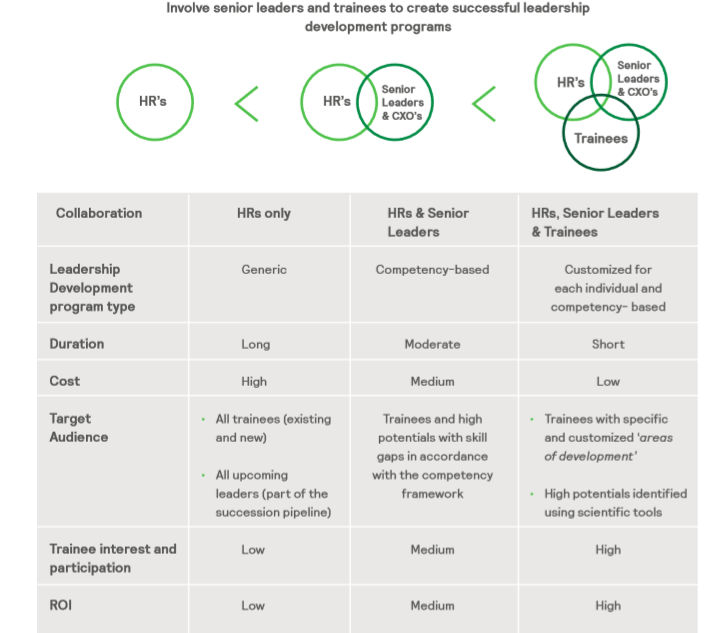
There needs to be a synergy between the existing leaders and new leaders for an organization to have a truly successful leadership that works together to promote organizational growth and productivity. Organizations that involve senior leaders in the leadership development process have a higher leadership success rate than organizations that do not follow this practice.
The leadership talent pool presently consists of millennials and baby boomers. The generation gap between these two causes a lot of conflict in organizational leadership, causing it to suffer in terms of performance delivery.
Involving the present leaders in the leadership development process can help bridge this gap by developing the skills in new leaders that have been known to be extremely relevant in driving performance historically, along with new skills that are needed to take care of changing organizational requirements.
Our study shows that the leadership success rate is maximum when HRs work along with Senior Leaders and Trainees (new, existing, and upcoming leaders) to plan and execute leadership development:
For a leadership development program to be successful in creating a strong leadership team, it needs to be practical in terms of the time and cost investment required to execute it. Leadership development programs that are very expensive and lengthy, often fail as both the organization and the participating leaders feel that the effort is not worth the outcome. Leadership development programs often go parallelly with the regular job responsibilities of the participating leader. Unless the leaders see great value in these programs, they will not prioritize it.
The second most crucial aspect that determines the success of leadership development programs is management involvement. The leadership team’s time and effort need to be significantly valued as assisting the leadership development efforts of the organization is simply one of the many tasks that they handle on a day-to-day basis. Their expertise should be leveraged in an efficient manner. Our study helped us uncover the best leadership development practices that can optimize the time and cost effort required to carry out leadership development and allow leaders to contribute towards shaping it to yield better results, without getting overburdened.
Originally published July 3 2019, Updated August 5 2021

A leadership assessment is a type of personality test used to identify and develop the competencies required in a good leader - decision-making, empathy, communication, inspiring others, etc. A leadership test can contribute to organizational planning initiatives, such as promotion decisions, succession planning, etc.

Assess & develop leadership competencies to future-proof your business
Know More

Automate Your L&D Programs With Virtual And Blended Assessment Center Development Centers
Know More

Measure the potential of your talent and make objective organizational decisions
Know More


Thanks for submitting the comment. We’ll post the comment once its verified.





 Behavioral Competencies
 Cognitive Competencies
 Coding Competencies
 Domain Competencies








Would you like to comment?