

Having strong leadership in place requires organizations to find the right leaders for all leadership positions. Hiring the right leaders successfully in hence the first step to creating successful leadership teams. The leaders can be hired from outside the organization or selected from the existing talent pool within the organization. In either case, identifying the right leaders for any position is a crucial job that determines the success of an organization extensively.
The process of leadership hiring has changed extensively over the years. With a shortage of leadership talent in the market globally and the dynamic and critical nature of leadership job roles, organizations are adopting new methods to hire the right leaders effectively.
The leadership hiring trends reflect the leadership-related challenges that organizations are faced with in recent times. The most critical ones being:
The current trends that organizations are following when carrying out leadership hiring are targeted to overcome the above-stated challenges as they represent the biggest bottlenecks in the path to achieve leadership success.
Let’s have a look at the latest leadership hiring trends that organizations are adopting to successfully hire the right leaders.
Given the leadership talent shortage globally, organizations are looking for filling leadership positions by promoting employees from within first, before hiring from outside. In order to be able to hire talent from within, organizations need to have a ready internal succession pipeline.
Leadership hiring, on-boarding, and development typically takes a lot of time. In the absence of a succession pipeline, organizations are forced to hire from outside, every time there is a leadership vacancy that needs to be filled. What this means is that you need to start looking for talent ~1 year or more in advance (before the vacancy becoming available), to ensure that the new hire is ready to take on the reins on time. Apart from time, leadership hiring is also a cost-intensive activity. For all these reasons, most leadership hiring experts advise that organizations look for leadership talent internally first as it makes the hiring process faster, cheaper, and yields a higher success rate.
Stephanie Troiano, Marketing Manager at ‘The Hire Talent,‘ shared why they always look for talent internally, when hiring for a leadership position “I think, in general, we always want to look internally before hiring for any position. A leadership and management position is typically a costly role to fill, so the better equipped we are to hire internally in the form of promoting an employee, the better. Growing talent within an organization has its obvious benefits, saving time and money in the hiring and recruiting process is one of them. ”
Also, with a scarcity of leadership talent in the market, not having an internal pipeline of high potentials, adversely impacts an organization’s chances of finding the right talent fit for their leadership vacancies.
34% of organizations state ‘lack of internal leadership succession pipeline’ as the biggest challenge when it comes to filling a leadership vacancy.


More and more organizations are basing their leadership hiring process on competency frameworks. The creation of individual competency frameworks for each job role helps organizations determine what skills are needed in each leadership role. Having a competency-based leadership hiring process helps organizations structure their hiring process in a way that enables selection of leaders that possess skills and abilities that can help them succeed in a given leadership role.
Leadership competency frameworks provide a structured framework for defining those skills and competencies that have the most significant impact on an organization’s performance. Used effectively, they become a road-map to achieve higher leadership effectiveness.
And yet, many organizations don’t have specific rules or frameworks to assess if a candidate is suitable for a leadership position. The decision is usually made based on the level of a company’s need or desperation, a gut feeling, and an overall assessment of skills, Nate Masterson, CEO at Maple Holistics shares.
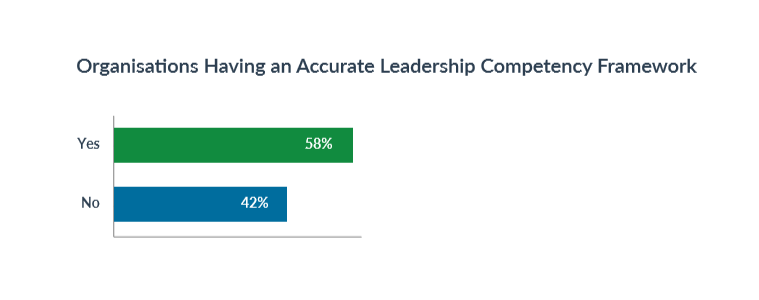
One interesting trend that we found is that 42% of organizations do not have any competency framework in place, based on which they can structure their leadership hiring process. Having a well-rounded competency framework that covers all major skill areas – cognitive, personality, behavior, domain, and technical – is essential to assess leadership talent thoroughly. Basing leadership hiring rounds around competency framework custom-designed for each job role, makes the talent assessment process more thorough and accurate, thereby increasing the hiring success rate.
On the importance of using competency framework for leadership hiring, Nate further adds – “When looking for new leaders, competency frameworks don’t have to be too firm, but there should be some general guidelines in place for the benefit of HR and the business overall. Everyone needs some direction, as this saves the HR team time and makes their work more productive.”
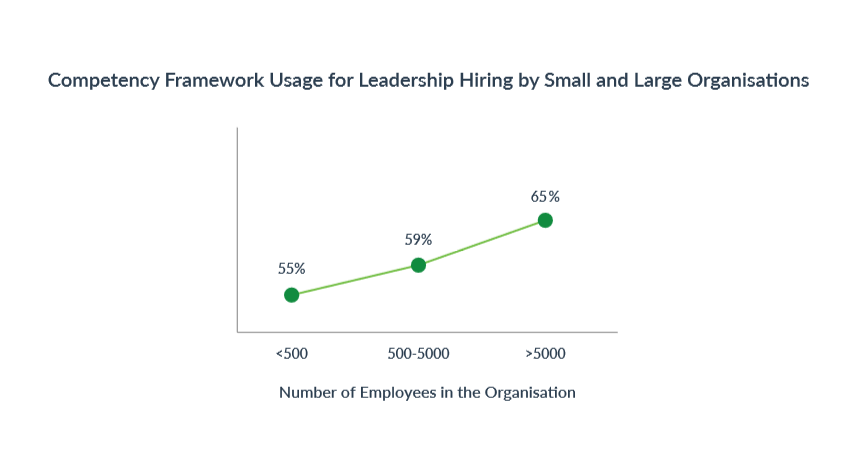
A further breakdown of organizations that do have a leadership competency framework revealed that a higher percentage of larger organizations have a leadership competency framework in place as compared to smaller organizations. Most Fortune 500 companies have a job role-wise and organization wise competency framework based on which they structure their employee hiring and learning & development process. These organizations enjoy a higher hiring success rate by identifying the right talent that continues to deliver performance consistently and stays in the organization for long.
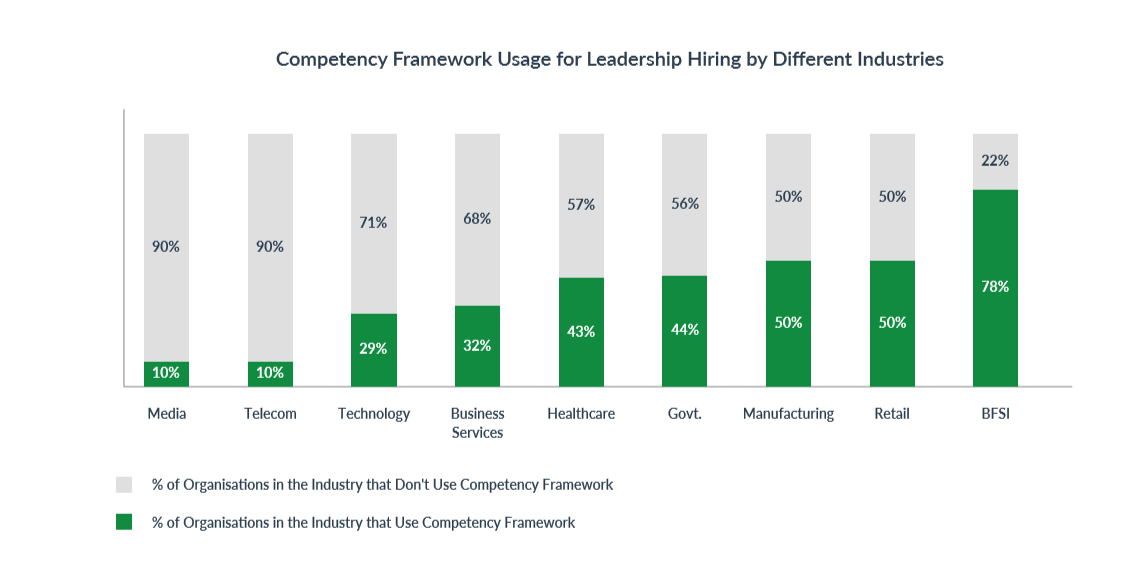
The adoption rate of competency frameworks for leadership hiring differs from industry to industry. Sectors that have more people-centric job roles such as BFSI and Retail are more likely to have a leadership competency framework, based on which they hire talent.
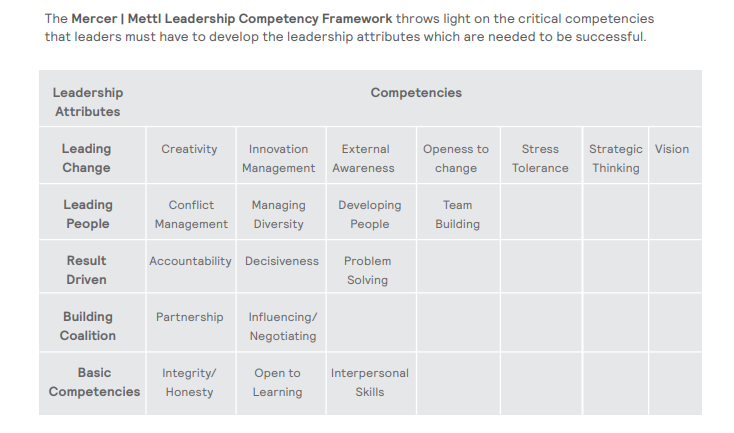
Based on extensive research, Mercer | Mettl has come up with a leadership competency framework that can be used to hire and develop leaders in any organization. The competency framework is based on four key leadership attributes that are needed in every leadership role with key competencies corresponding to each attribute.
The nature of leadership roles has changed a lot over the ages, the skills that were needed to succeed in leadership roles in the past are not so relevant anymore. The leadership rein in most organizations is being handed down from baby boomers to millennials and there is a huge disconnect between what both the generations consider as a valuable leadership skill set.
Leadership roles are incredibly complex. They require high levels of cognitive, domain, and, most importantly, interpersonal skills to carry out day-to-day work tasks. Most leadership experts agree that the most critical aspect that needs to be assessed in talent during leadership hiring is their cultural fitment and leadership potential.
Beth Tucker, CEO of KNF&T Staffing Resources shares why it’s essential to evaluate these two aspects of talent during leadership hiring – “One of the most important things to consider (when assessing talent for leadership hiring) is their potential. You can assess this more easily by asking behavioral-based questions. These are meant to show how someone has responded in certain situations and predict how their future behavior will be like.”
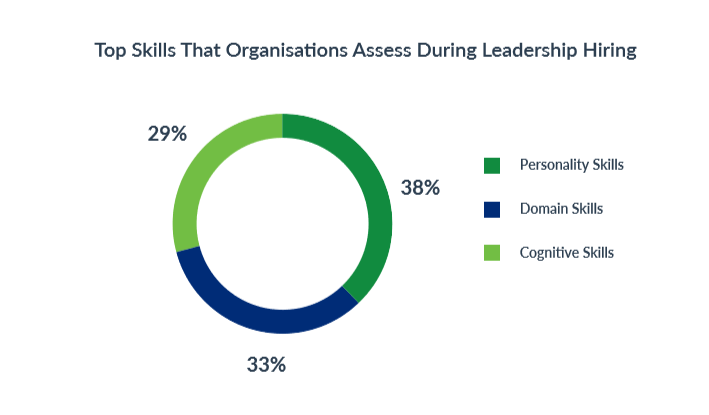
However, assessment of other skills and competencies such as cognitive, tech, domain, learning agility, and dark personality traits, is quickly catching up. HR Expert Ira Wolfe suggests assessing leadership talent on 6 to 10 core competencies. According to her, universal competencies for leaders tend to include complex problem solving, visioning and strategy, leading others, customer focus, relationship management, dealing with complexity, motivating others, and coaching others.
Organizations belonging to different industries focus on assessing different skill sets during leadership hiring. While the healthcare industry focuses more on assessing personality skills, technology industry prioritizes domain skills assessment more (which includes testing an individual’s tech skills and functional skills). It is essential to assess talent on skills that are relevant in their job role and industry.
While the importance of skill wise fitment in the job role and organization cannot be denied, organizations also need to be mindful of the talent’s ability to fill the leadership gaps left by the last leader and be capable of learning new skills as and when demanded by the job role.
Susan Gilell-Stuy, Managing Principal at Susan Gilell-Stuy LLC, explains why it’s important to assess for more than just job role and cultural fitment – “The leaders ‘learning ability’, which includes a cognitive component and the motivation to pick up new knowledge and skills quickly and with flexibility, in addition to the person’s raw intellect, a person’s vision, imagination, strategic thinking and adaptability combined with an intrapreneurial mindset, are key indications of executive leadership potential.”
Assessing the right skills in an accurate manner increases the chances of hiring the right leader significantly. More and more organizations are using talent assessment tools such as psychometric assessments, leadership assessments and assessment centers to thoroughly assess the skill set of the candidates accurately and make data-backed decisions.
The use of modern scientific tools for talent assessment is gaining pace rapidly. According to Mike Maynard, Business Advisory Practice Group Chair at Keyser, the use of scientifically validated talent assessment tools such as psychometric assessment and cognitive assessment can help assure leadership success more than 80% of the time. In fact, organizations that do not use any scientific tool such as talent assessment during their hiring process end up with a bad hire ~50% of the time.
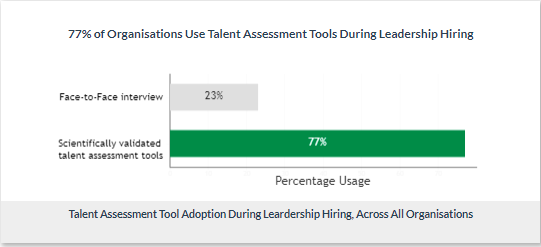
Organizations are well aware of the benefits that use of scientific talent assessment tools bring to the table, which is why 77% of organizations make use of some scientifically validated talent assessment tool during the leadership hiring process.
Leadership hiring experts firmly believe that the age-old practice of assessing talent via ‘face to face interviews only’ is not very accurate.
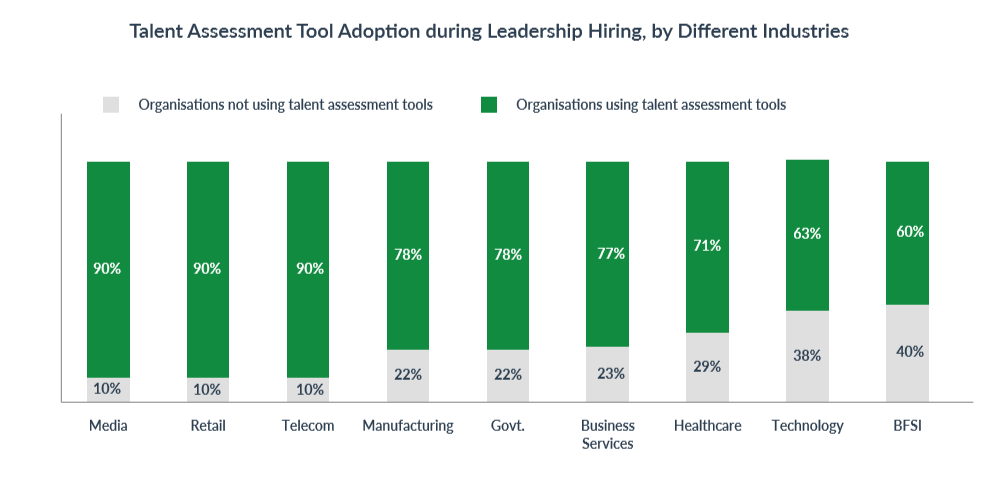
In industries where the job roles are more customer-facing such as media, retail, and telecom, the talent assessment tool adoption rate is higher. Building strong and long-lasting customer relations require strong interpersonal skills.
Traditional interviews fail to assess soft skills (such as communication) accurately 63% of the time (Talent Now, Recruitment Statistics 2018). Use of talent assessment tools that assess interpersonal skills accurately and help in data-backed hiring decision-making substantially increase the chances of finding the right talent in these industries.
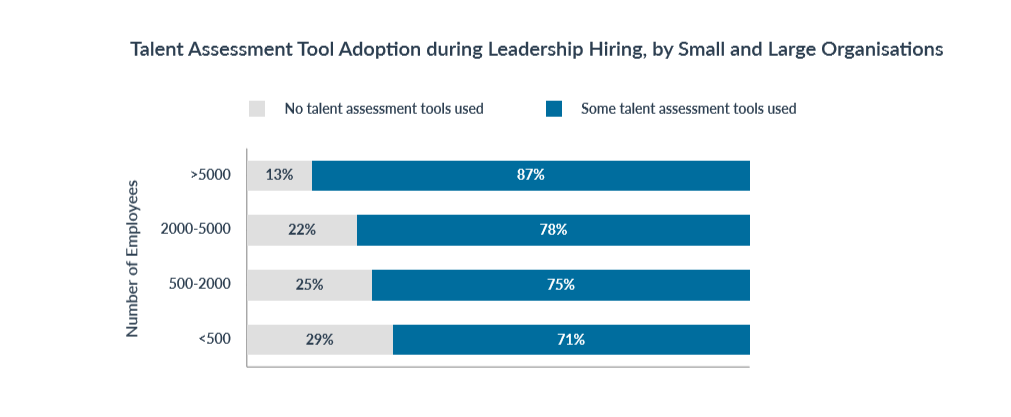
Bigger companies have the highest scientific talent assessment tool adoption rate for leadership hiring. 87% of large companies (having an employee size of 5000 and above) use some talent assessment tool as compared to 71% of small-sized companies.
One of the most significant factors driving the use of hiring tools in larger companies is having an organization-wide competency framework that helps companies understand their talent assessment needs in a better way. Also, larger budget allocations for hiring allows HR to access tools that they know will increase their ability to hire the right talent.
Helen shares her views on why the best hiring tools are used mainly by big corporations only – “For organizations hiring employees into leadership positions, there is this perpetual need to balance resources, accuracy, and need — and sometimes those things conflict. Assessment centers, while seen as the gold standard, are incredibly expensive to set up and administer. These are reserved for high-level positions in resource-rich companies, as the payoff may not be proportional to the cost for most leadership positions.”
Now that we are aware of the talent assessment tool adoption rate across organizations, let’s have a look at the most common tools that are being used for leadership talent assessment.
Most organizations assess leadership talent using psychometric assessments, followed by task-based exercises and leadership assessments. Psychometric assessments are most preferred as they holistically assess an individual’s personality, behavior as well as cognitive skills. In layman terms, psychometric assessments evaluate a person’s IQ and EQ. It’s a well-proven fact that emotional intelligence and leadership success is highly correlated. Leaders with high emotional intelligence are more likely to succeed.
For a more thorough assessment of leadership talent, organizations rely on leadership assessments that provide data-backed insights on the talent’s leadership skills such as the ability to lead people, drive business growth, interpersonal skills, learning agility, critical thinking, decision making, etc.
Aram Lulla, GM of the HR division at Lucas Group advocates usage of leadership assessments – “Using personality and specific leadership assessment tools can give additional data points to assess fit while utilizing references to specifically ask about their performance and their alignment with the core values of your organization.”
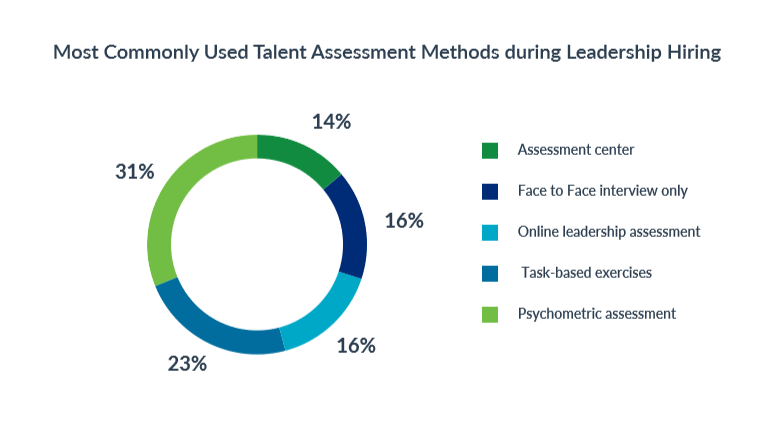
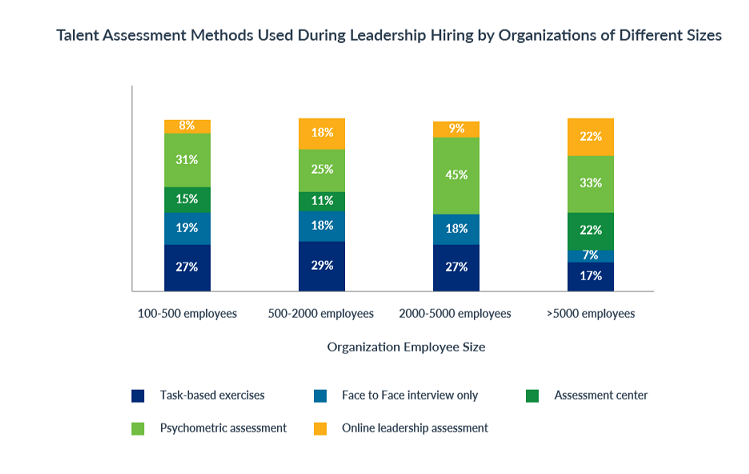
In general, psychometric assessments are more commonly used during leadership hiring; however, the preference for talent assessment tool usage changes with organization size. Large organizations use more of online leadership assessment and assessment centers, whereas smaller organizations assess talent via task-based exercises. Budget availability and job role wise competency frameworks determine the tools that organizations use to hire leadership talent. For example, if a job role requires high numerical ability, organizations will often screen candidates using aptitude tests.
As most of the quality leadership talent is spoiled for choice with their demand far exceeding the supply, organizations are trying to make their leadership hiring process as delightful and convenient for the candidate as possible to prevent candidate back out, by use of interesting hiring tools and making the hiring process more structured to reduce the hiring lead time.
27% of organizations consider long hiring lead time as the biggest factor that is responsible for their inability to hire and onboard the right leadership talent.
Long hiring lead time is the biggest reason for candidates backing out in the middle of the hiring process. Most leadership hiring experts that we interviewed, emphasized the importance of providing a good candidate experience during the hiring process, to ensure that they go through with it. Providing a good candidate experience involves keeping the hiring process structured, concise, and staying in constant touch with the candidate.
On average, the leadership hiring process takes 3.5 months to be completed. However, this time frame varies with organizational size and industry.
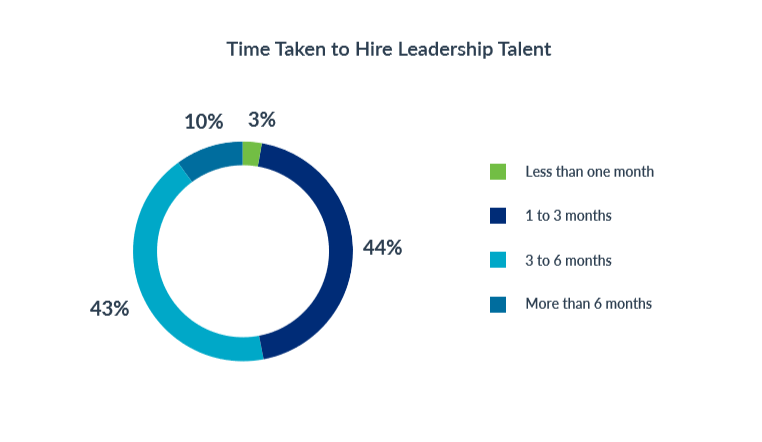
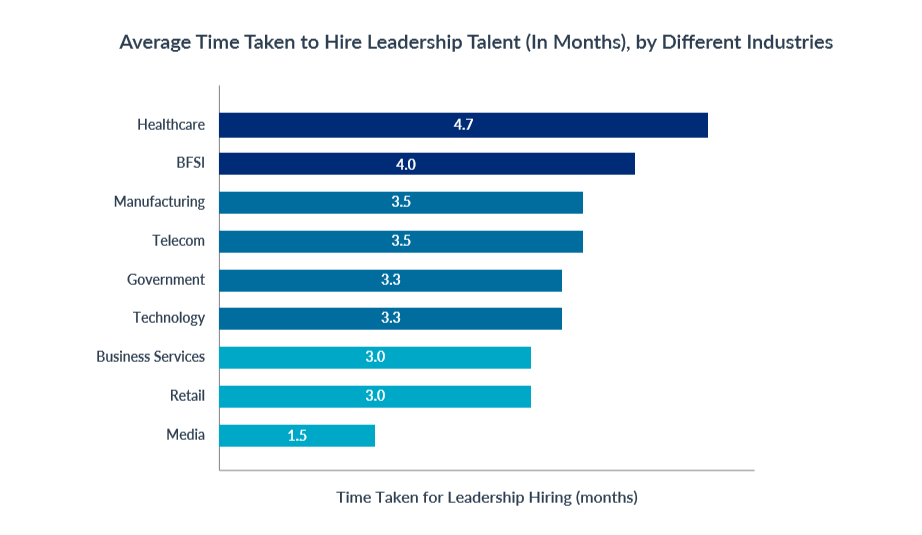
Larger organizations take longer to hire leadership talent as compared to smaller organizations. This is because of the large number of processes in place that they must adhere to while carrying out leadership hiring. In smaller organizations, the leadership hiring process is improvised based on how fast they want the new leader to join.
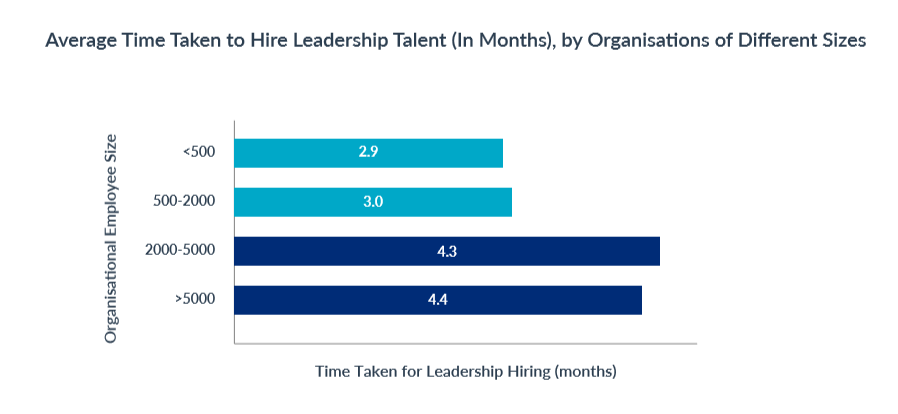
But again, the time invested to hire leadership talent also depends on how high in the job hierarchy is the new hire going to be placed.
Scott Miller, CMO at FranklinCovey agrees to this, in his words- “Again, the timelines vary. Hiring for a CEO or a position in a foreign country might take much longer than a role that is less nuanced or senior. I’d say the less senior the role, the less time it takes. The more senior the role is, the longer your search may be and the more discernment you should employ. Getting the hiring wrong for senior leadership roles is immensely costly, damaging to the culture and the most difficult to unwind without damage to the organization.”
In sum, organizations can become more efficient in leadership hiring and keep the process short, while not compromising on the quality of the hiring process or hires. This can be achieved by using scientifically validated talent assessment tools and competency frameworks. The right hiring approach along with having a culture of nurturing and preparing existing employees to take up leadership positions can ascertain leadership success for any organization to a great extent.
You may also like to read: Top Leadership Hiring Best Practices in 2020
Originally published June 25 2019, Updated August 5 2021

A leadership assessment is a type of personality test used to identify and develop the competencies required in a good leader - decision-making, empathy, communication, inspiring others, etc. A leadership test can contribute to organizational planning initiatives, such as promotion decisions, succession planning, etc.

Assess & develop leadership competencies to future-proof your business
Know More

Automate Your L&D Programs With Virtual And Blended Assessment Center Development Centers
Know More

Measure the potential of your talent and make objective organizational decisions
Know More


Thanks for submitting the comment. We’ll post the comment once its verified.





 Behavioral Competencies
 Cognitive Competencies
 Coding Competencies
 Domain Competencies








Would you like to comment?